
| What to check | PowerNutrient | Typical gummy |
|---|---|---|
| Shilajit per serving | 500 mg of purified extract | 100 to 400 mg, or an equivalent |
| How the number is stated | Actual amount in the gummy | "6,000 mg" from a 20:1 ratio |
| Fulvic acid | 20%, standardized | Not stated, or an unexplained 50 to 75% |
| Calories per serving | 20 | Up to 200 |
| Every amount disclosed | Yes, five ingredients, five numbers | Proprietary blend is common |
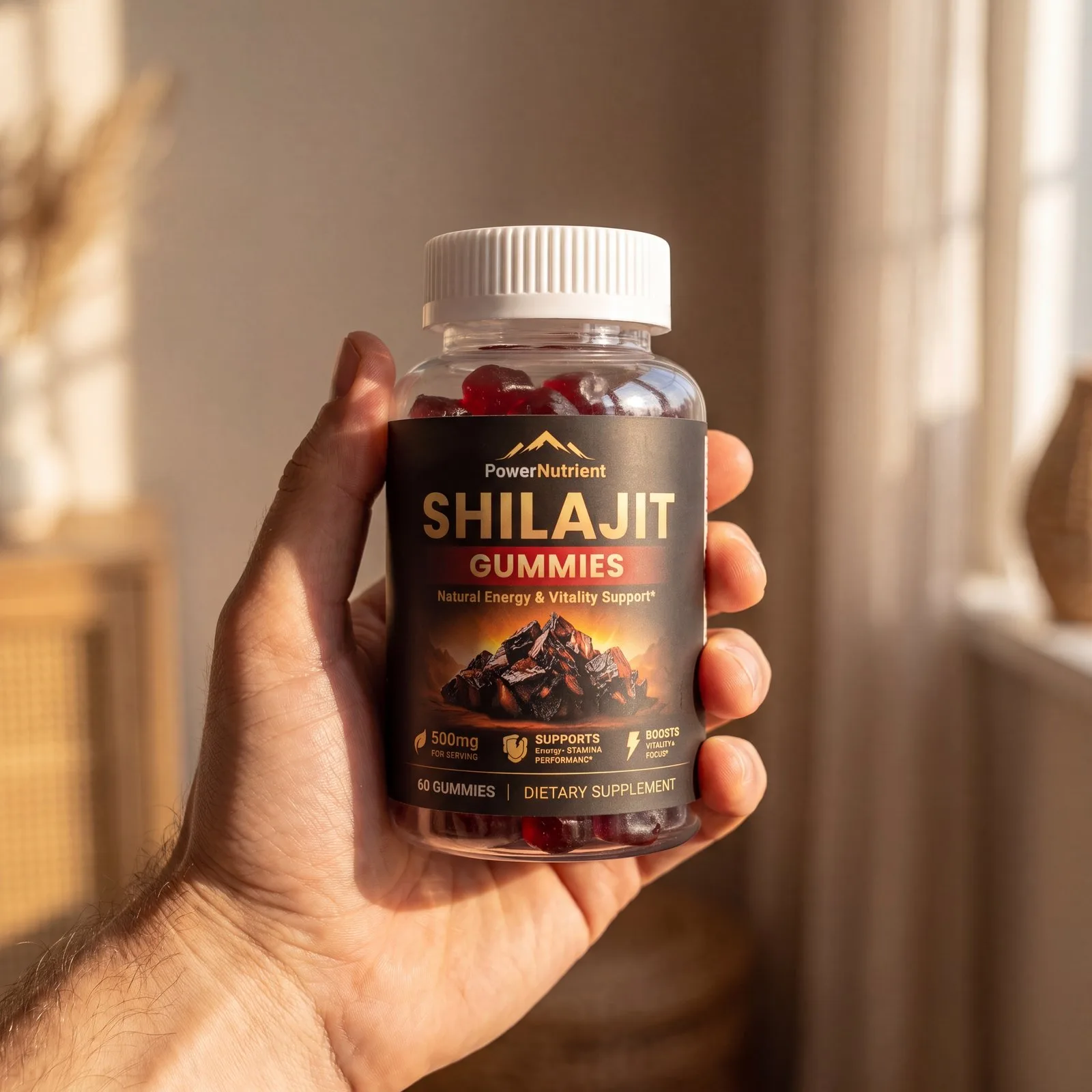 01 · the dose
02 · the label
03 · the gummy
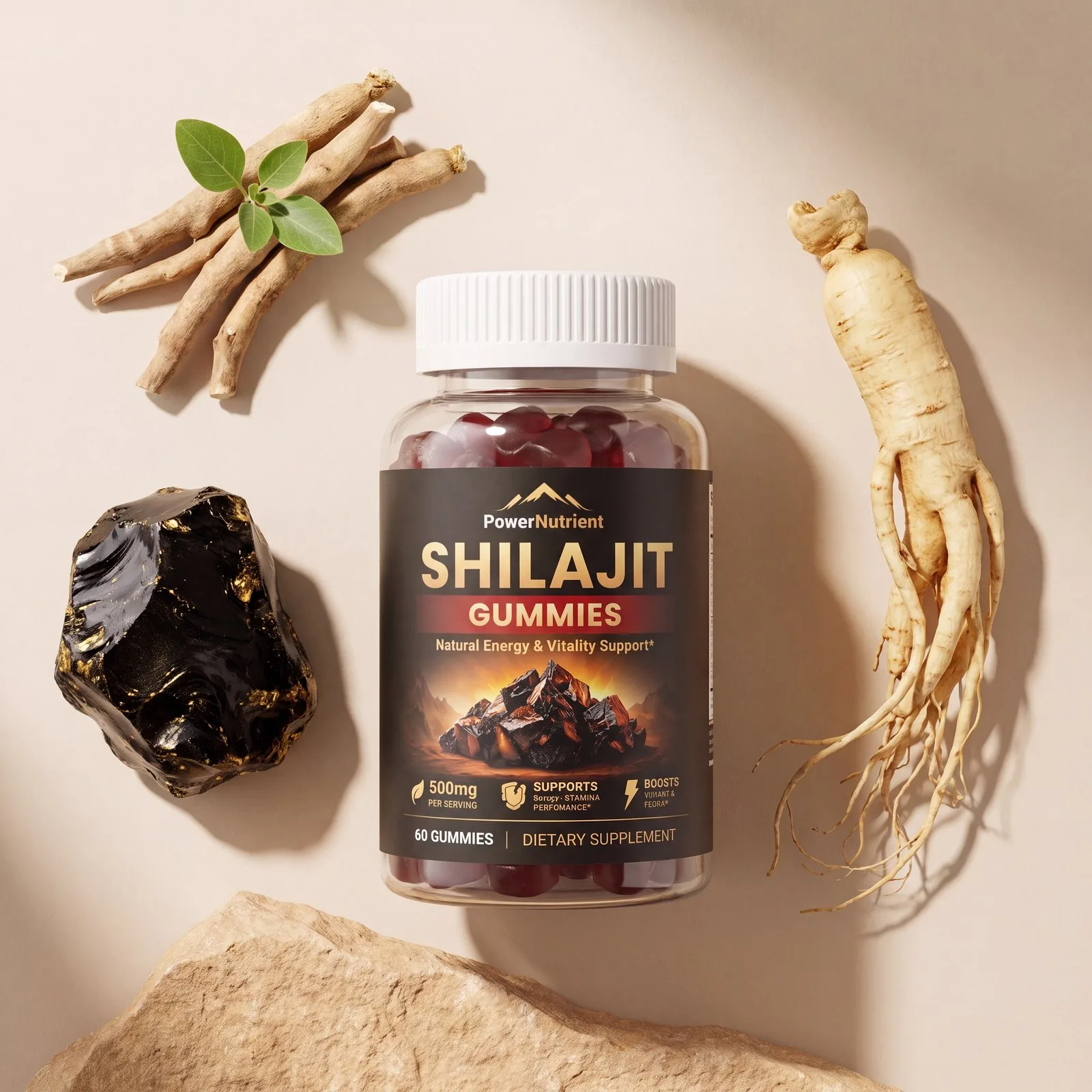 04 · the stack
05 · the raw material
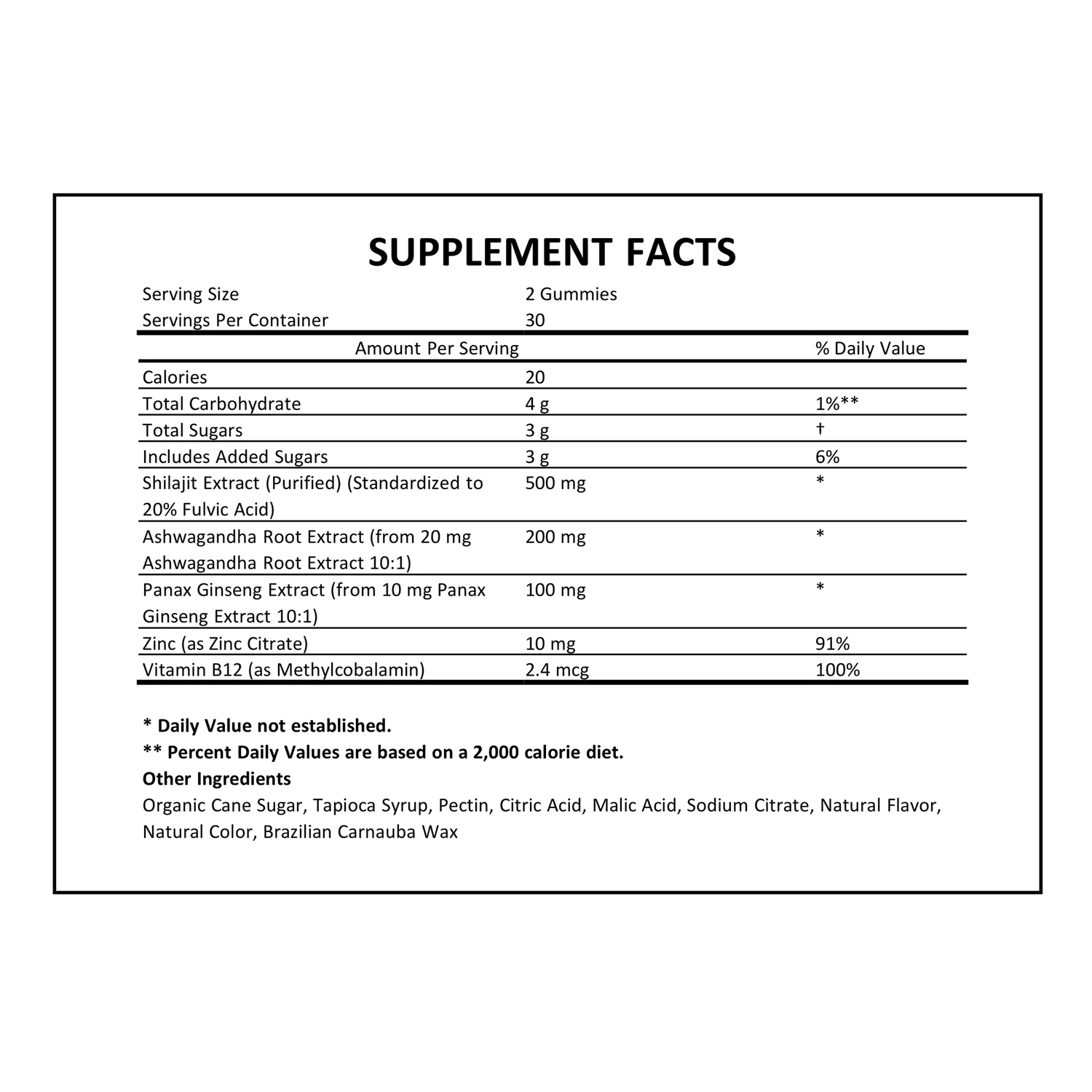 06 · the panel
chapter 01
500mg
The dose the research used
The best-designed shilajit trial ran eight weeks at 500 mg a day and found better strength retention under fatigue. We print 500 mg because that is what is in the serving, and because it is the dose that was studied. What the trials actually found →
chapter 02
20% fulvic acid
A number with a method behind it
Authentic purified shilajit lands near 15 to 20% fulvic acid. Labels that say 70 or 80% are usually counting organic matter that is not fulvic acid. We print the smaller, measured number. Why the numbers differ so much →
chapter 03
20calories
Two a day, no jar, no spoon
Berry gummies with 3 g of sugar and pectin, no sugar alcohols. The same purified extract, standardized the same way, at a measured dose you cannot eyeball wrong. Gummies vs resin, honestly →
chapter 04
5ingredients, 5 numbers
No proprietary blend
Ashwagandha 200 mg and panax ginseng 100 mg are stated as 10:1 extract equivalents from 20 mg and 10 mg of extract, and the panel prints the derivation. Zinc 10 mg and B12 2.4 mcg are simple amounts. Shilajit and ashwagandha together →
chapter 05
0shortcuts
Purified from the raw resin
Raw shilajit carries whatever the rock carried. Purification is not a refinement step, it is the entire point, and it is what removes the heavy metals raw resin carries. Real shilajit vs fake →
chapter 06
67¢per serving
Priced like a supplement
$19.99 for 30 servings on Amazon with Prime shipping, which works out to 67 cents a day. Non-returnable, as ingestible supplements are, so everything you need to decide is printed on this page and on the panel. How to read a shilajit label →
